
When it goes wrong
Defects and the Building Bond
How NSW protects owners in new apartment buildings: Home Building Act statutory warranties (6 and 2 years), the Design and Building Practitioners Act duty of care, the 2% Strata Building Bond, and Building Commission NSW.
7 min read · Last checked
On this pageThe short versionOn this page
In a brand-new apartment tower, serious building defects rarely announce themselves on settlement day. Water seeps slowly behind fresh tiles. Fire collars sit hidden above plasterboard ceilings. Balconies only start leaking after the second big east-coast low.
Building Commission NSW's 2025 Strata Defects Research Report surveyed 520 Class 2 apartment buildings registered between 2018 and 2024 and uncovered a stark detection lag: 53% of surveyed buildings reported serious defects, climbing from 21% of 2024 builds to 69% of 2018 builds (with waterproofing defects jumping from 7% in 2024 builds to 66% in 2018 builds). Even more telling, defects were first spotted by occupants in 63% of affected buildings — compared with just 12% spotted during visual building bond inspections.
Waiting passively for a developer to "sort it out" is how buildings run straight past their legal deadlines. Here is how every NSW defect clock actually works.
The short version
- Two tracks run side by side: Your owners corporation's strict section 106 duty to repair common property does not pause while you chase the builder.
- Statutory warranties (Home Building Act 1989 s 18B, s 18E): 6 years from completion for major defects (waterproofing, fire safety, structural load-bearing elements) and 2 years for other defects. Clocks start at completion, not discovery.
- Statutory duty of care (Design and Building Practitioners Act 2020 s 37): Builders, designers and supervisors owe a direct duty of care to the owners corporation and subsequent buyers, subject to the 6-year limitation period and 10-year longstop (EP&A Act 1979 s 6.20).
- 2% Strata Building Bond (Part 11 SSMA): Applies to residential/mixed-use buildings of 4+ storeys (contracted from 1 January 2018). Interim inspection at 15–18 months (s 199), final inspection at 21–24 months (s 201). The planned rise to 3% has been deferred until 1 July 2028.
- Building Commission NSW can inspect serious defects in buildings up to 10 years old and issue binding rectification orders against developers and builders.
Never leave defects to a quick visual walk-through
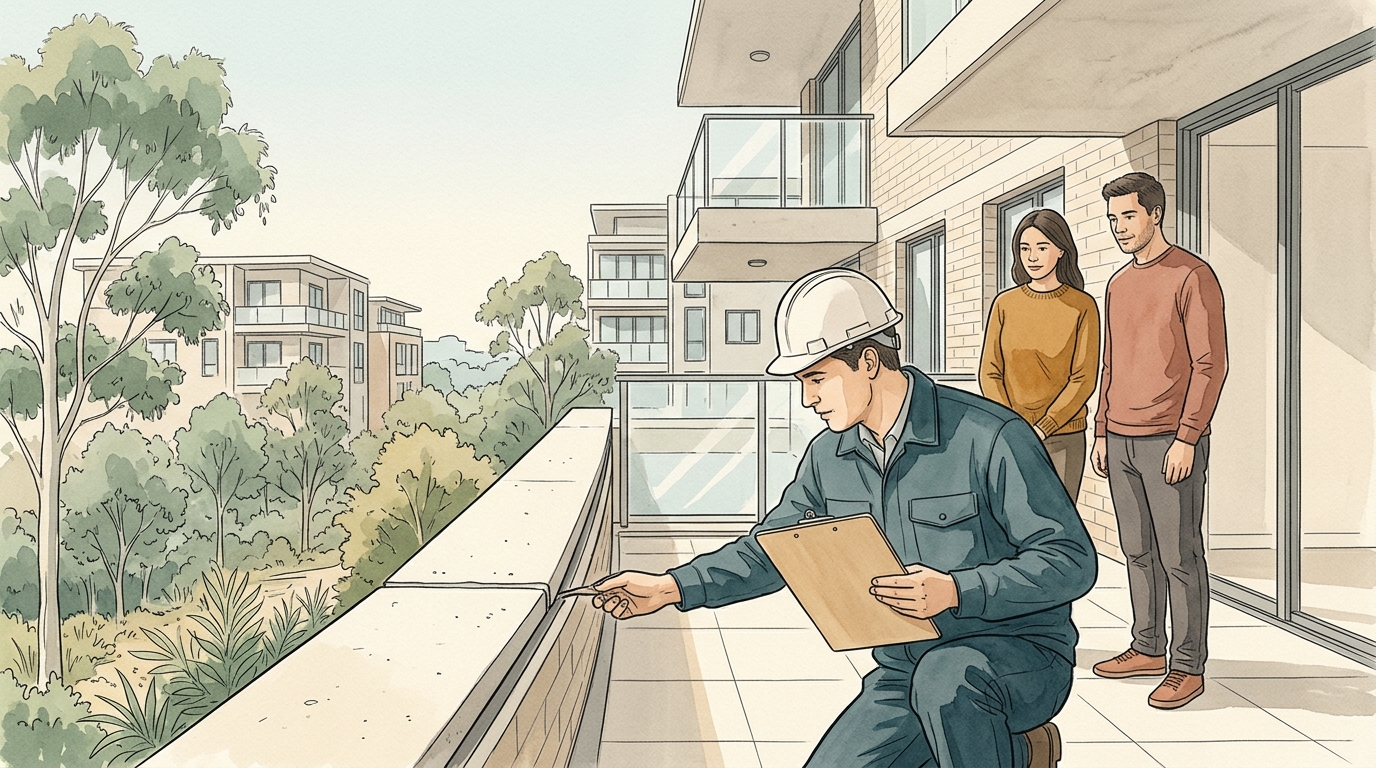
The 6-year defect and bond clock
Click each milestone below to see which legal windows open — and close — after a new NSW apartment building receives its Occupation Certificate.
Interactive defect clock
The 6-year defect & building bond timeline in NSW
Months 15–18
Interim Inspection & Report
An independent building inspector (approved by the owners corporation, paid for by the developer) inspects the building and delivers the interim defect report. The builder gets a window to fix listed defects.
How the 2% Strata Building Bond works (Part 11)
For residential and mixed-use strata buildings of 4 or more storeys (which sit outside the Home Building Compensation Fund) built under contracts from 1 January 2018, Part 11 of the Strata Schemes Management Act 2015 (s 191 to s 213) sets up a compulsory bond and two-stage inspection regime:
- Bond lodged before Occupation Certificate (s 207): The developer lodges 2% of the total building contract price (including variations and GST). If the scheme believes the developer lowballed the contract price, it can apply to NCAT under section 211. (Building Commission NSW confirmed in June 2026 that the scheduled rise to 3% is deferred to 1 July 2028.)
- Choosing the inspector (s 195): The developer proposes a qualified independent inspector within 12 months, and owners approve or reject them by ordinary resolution at a general meeting. Crucially, the developer cannot vote or cast proxies on this motion (Schedule 1 cl 15). Any lot owner can also object to the Secretary within 14 days for any reason.
- Interim inspection & report — Months 15 to 18 (s 199): This is the single most critical deadline in the scheme. Why? Because the final report generally cannot add new defects that were left off the interim report — only defects caused during rectification (s 201(3)). Commission your own independent defect report before month 15 and hand it to the building bond inspector so nothing gets missed.
- Builder rectification — Months 18 to 21 (s 206): The builder gets a statutory right of access to fix listed defects. Do not unreasonably block access — under section 209, refusing reasonable access can reduce or forfeit your bond payout.
- Final inspection & payout — Months 21 to 24 (s 201, s 209A): The inspector checks whether interim defects were properly fixed. If defects remain, the parties agree on rectification costs within 30 days or the Secretary appoints an independent cost assessor (fee split 50/50 under s 209A). Money paid from the bond must be spent fixing those defects, with any leftover refunded to the developer (s 210).
Watch the overlap: The final bond report arrives right as your 2-year minor defect warranty expires under section 18E of the Home Building Act 1989. Never assume the bond covers everything — 2% of a $20 million build is $400,000, which a single major waterproofing remediation can blow past twice over.
Why structured negotiation beats litigation
Building Commission NSW's 2025 research tracked roughly $45 million spent across 211 NSW strata buildings dealing with serious defects. The breakdown is sobering:
Where NSW defect money actually goes
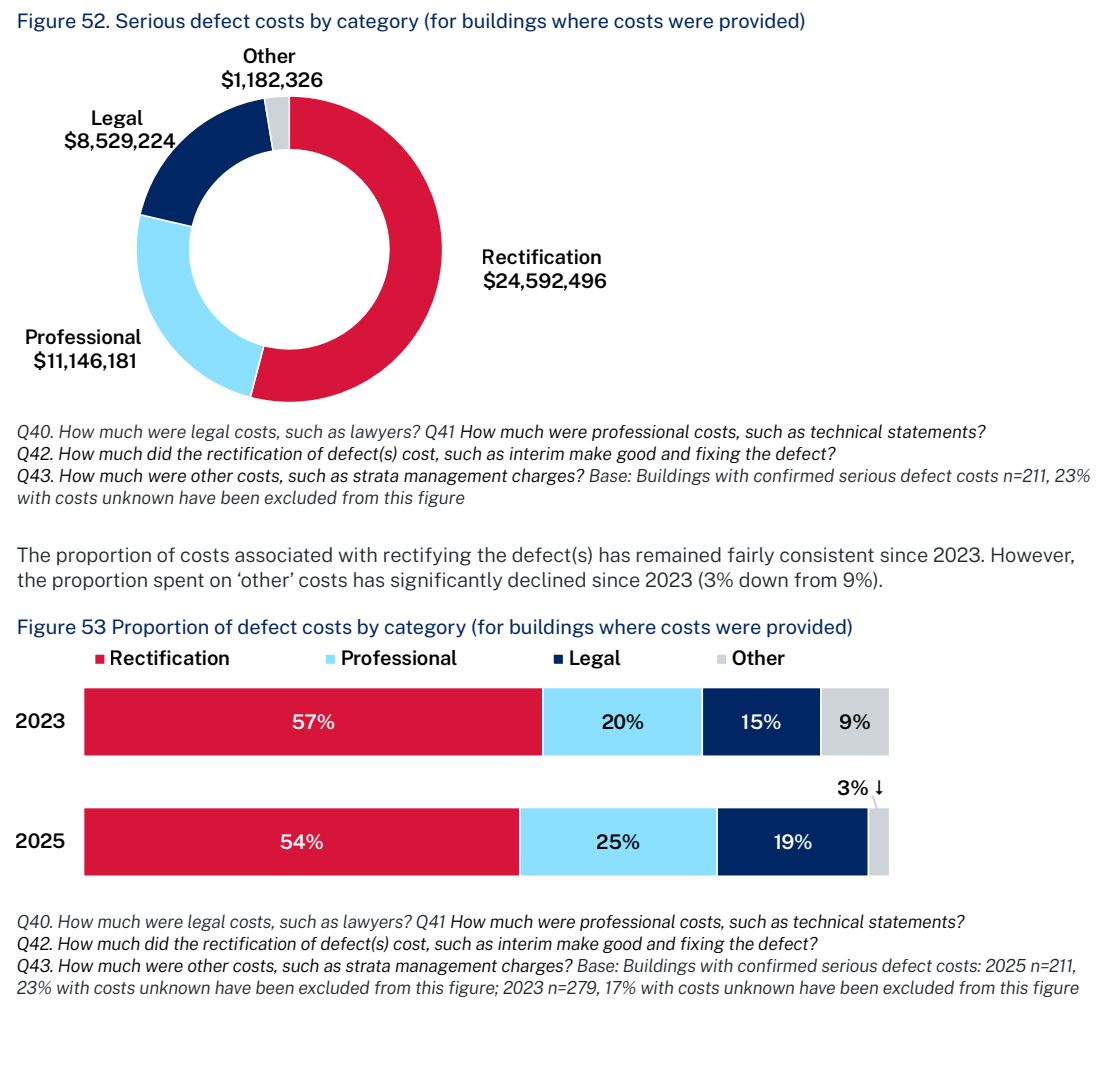
Two practical takeaways follow straight from that data:
- Start early so you have leverage without burning $200,000 in court. Engage a qualified building consultant and strata lawyer by Year 1 (before the interim bond report and 2-year warranty) and again no later than Year 4 (well ahead of the 6-year major-defect cutoff). Remember NCAT's home-building claim cap is $500,000 — bigger defect claims go to the Supreme Court, where legal fees escalate rapidly.
- Use Building Commission NSW and your Initial Maintenance Schedule. Report serious defects in buildings under 10 years old to Building Commission NSW (which can issue binding rectification orders without your scheme funding a Supreme Court war), and keep your building's standard-form Initial Maintenance Schedule (s 115) up to date so a builder can't blame genuine construction defects on "poor maintenance."
Check your understanding
1. A 6-storey NSW apartment building receives its Occupation Certificate in June 2026. When must the interim building bond inspection and report happen under section 199?
2. Your new apartment building has serious balcony waterproofing defects. When does the statutory warranty for major defects expire under section 18E of the Home Building Act 1989?
3. At the general meeting voting to approve the developer's nominated building bond inspector, the developer still owns 35% of the units and tries to vote in favour. Can they?
Go deeper
- The NSW Strata Building Bond explained
- Building defects after settlement: your options
- Structural defects after completion: state-by-state guide
- Defect detection lag in new NSW apartment buildings
- The real cost of strata building defects in NSW
- The builder agreed to fix defects — what next?
- New developer handover rules: what to check at the first AGM
General information only, not legal advice.