
Your unit and when it goes wrong
Renovations, repairs, entry and living together
How NT renovations are approved under both Acts, $25k fidelity fund rules (from 30 March 2026), repairs, photoelectric smoke alarms, pets, parking, noise and our free NT kit.
4 min read · Last checked
On this pageRenovations under both NT ActsOn this page
Whether you are planning a bathroom renovation, chasing a leak, or checking pet and smoke-alarm rules in Darwin, your rights sit across your scheme's by-laws, the governing unit title Act, and Northern Territory building and fire laws.
Renovations under both NT Acts
- Inside your unit only (paint, carpet, same-layout kitchen): Usually needs no body corporate approval unless your scheme statement by-laws require it. Remember that under section 37(2) of the 2009 Act, walls, floors and ceilings separating units are common property.
- 2009 Act (disturbing common property or changing external appearance): Requires written approval by majority resolution (more than 50% of all units, under Default by-laws 2, 4 and 7 and s 79(6)) — or committee approval where delegated (s 30), subject to the 7-working-day owner opposition window. There is no statutory reply deadline and no deemed approval.
- Legacy 1975 Act: Altering a structure in or on a unit (Schedule 1 Article 2(4)(e)) or fixing items into common property (Article 4, excluding locks, safety devices and insect screens) requires a majority resolution.
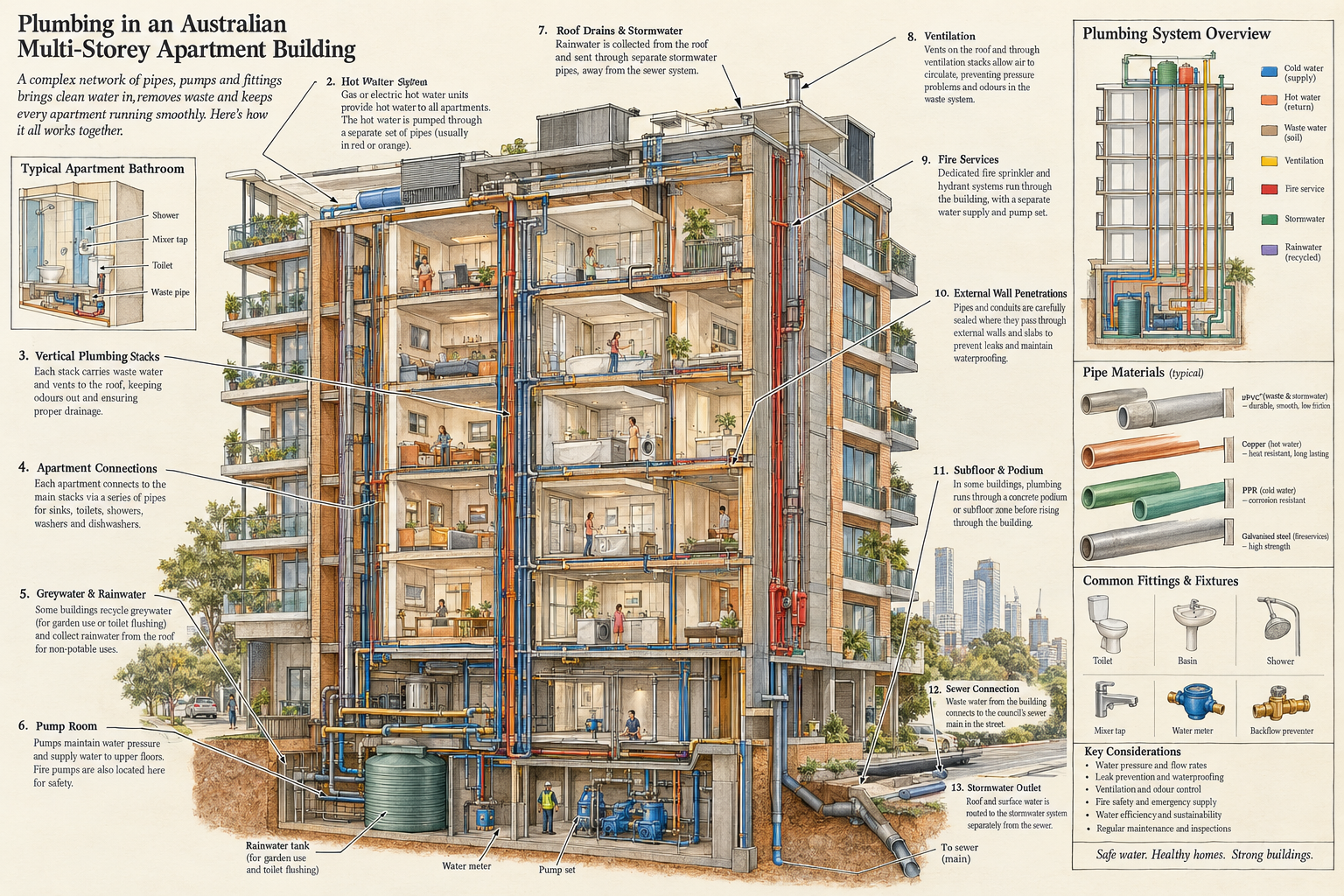
- NT building rules (updated 30 March 2026): Most structural or plumbing alterations require a building permit from a registered building certifier under section 55 of the Building Act 1993. From 30 March 2026, the threshold for a registered building contractor on prescribed work (Building Regulations 1993 regs 41A and 41E) and a Fidelity Fund certificate on residential work up to 3 residential storeys (Building (RBI and Fidelity Fund Schemes) Regulations 2012 reg 5) rose from $12,000 to $25,000 (renovations that do not increase floor area are generally excluded unless part of an extension contract).
Repairs, right of entry and smoke alarms
- Common property maintenance: The body corporate has the statutory function of managing and maintaining common property (s 27; Standard Module
cl 49). Unreasonable failures to repair can be enforced at NTCAT (s 85). - Right of entry: Under section 50, reasonable notice is required for owner-to-owner entry under an easement (except in an emergency). Always check your scheme statement and management module before entering another unit.
- Photoelectric smoke alarms: Under the Fire and Emergency Regulations 1996 and NT PFES guidance, owners must install photoelectric smoke alarms on sale, on a new or renewed tenancy, or whenever an older alarm fails. Landlords install alarms; tenants keep them working during the lease.
Pets, parking, noise, short-stays and solar/EV
- Pets: Under the 2009 Act default by-laws, keeping a pet requires written approval by majority resolution (with no statutory deadline; unfair refusals can be challenged at NTCAT). For tenants, NT landlords have 14 days to object and apply to NTCAT or the tenant may keep the pet (subject to valid scheme by-laws). Assistance animals are protected under federal discrimination law.
- Parking, noise and smoking: Governed by Default by-law 1 (nuisance/loud noise) and your scheme statement by-laws; never clamp a vehicle on common property — use written notices and s 96 contravention notices instead.
- Short-term rentals, solar and EV: The NT has no statewide STRA register, night cap or levy, and no dedicated sustainability voting shortcut — rooftop solar and EV chargers affecting common property follow standard alteration approval rules plus local planning and licensed electrical compliance.
Check your understanding
1. From 30 March 2026, what is the minimum residential building work value that triggers a Northern Territory Fidelity Fund certificate (on buildings up to 3 residential storeys)?
General information only, not legal advice.