
Disputes & Living
When Neighbours Treat Common Property Like Their Own: Informal Use, Exclusive-Use By-Laws and How to Unwind a Tolerated Habit
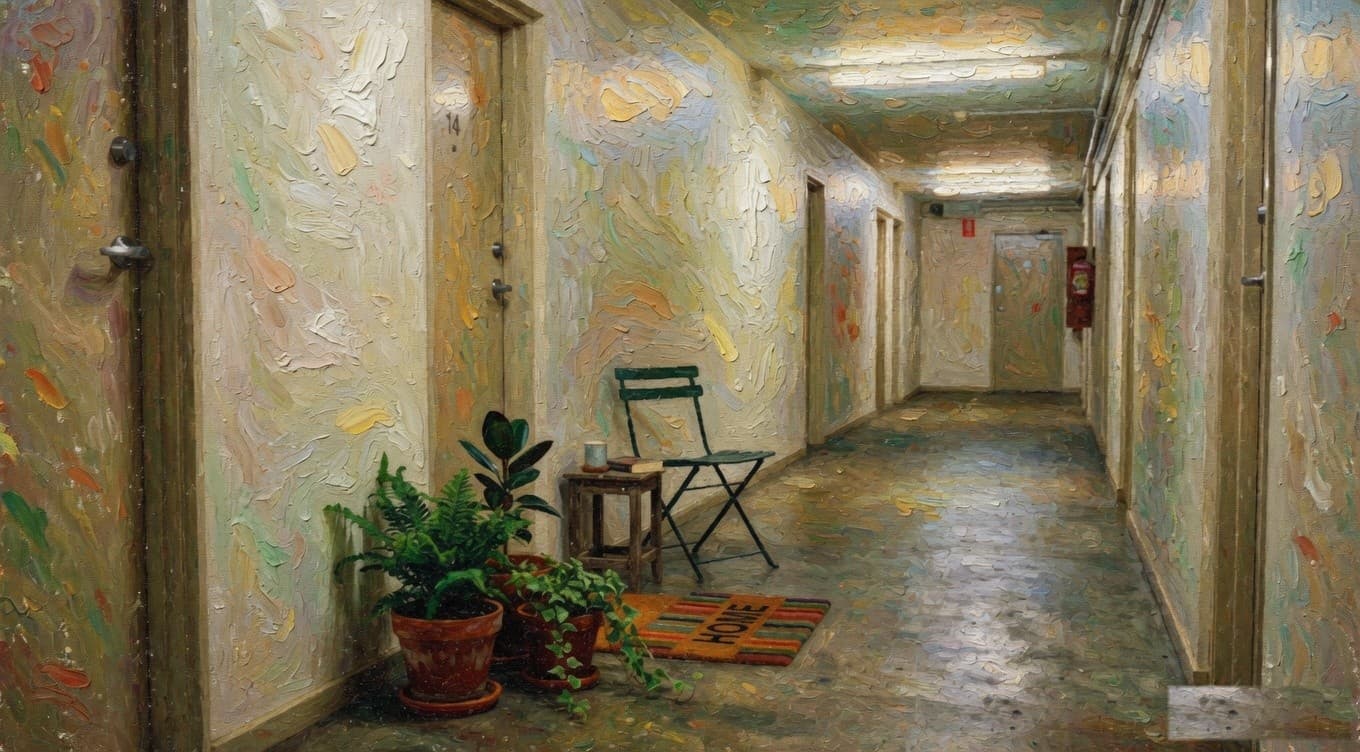
A planter in the corridor. A storage cabinet by the fire stair. A car that always parks in the same visitor bay. A sign on a shared wall. Common property creep is a slow-motion governance problem with a defined legal pathway (temporary use, minor renovation, exclusive-use by-law) and a long history of tribunal orders for committees that get the steps wrong.
· 13 min read
On this pageStart hereOn this page
- Start here
- Why common property creep is a slow-motion problem
- The private-use test
- Temporary use vs minor renovation vs exclusive use
- The legal hierarchy of approval
- State-by-state: by-laws and exclusive-use mechanisms
- New South Wales
- Victoria
- Queensland
- Western Australia
- South Australia
- Tasmania
- Australian Capital Territory
- Northern Territory
- The compensation question
- The "kindness trap"
- Selective enforcement and tribunal risk
- Parking takeover
- Storage takeover
- Signage and naming on common walls
- Garden plots and courtyard takeover
- How to unwind tolerated use without creating a war
- Renovation pathway
- Common objections and extra checks
- Committee checklist
- Exclusive use is a registered right. A smile is not
- How UnitBuddy fits
- Further reading
Start here
- Common property is owned collectively by every lot. One resident occupying it permanently, whether that's a planter, a cabinet, a courtyard chair or a sign on a shared wall, is a private taking of a shared asset. Even when it looks harmless.
- Australian strata law builds a four-step hierarchy of approval: temporary use, committee-approved minor work, special-resolution major change, and registered exclusive-use by-law. Each step has its own threshold, paperwork and consequences.
- Adverse possession does not run against common property. Twenty years of unchallenged use does not create a legal right. It does create a political problem when the committee finally tries to act.
- The most expensive mistakes aren't the takeovers themselves. They're the kindness traps. Informal "you can keep it there for now" decisions bind successor committees and make selective enforcement almost impossible to defend at NCAT or VCAT.
Anyone who's tried to ask a long-standing resident to remove the cabinet that's lived in the corridor for eight years knows the conversation rarely ends with a polite handshake. The quietest strata disputes are often the hardest. A resident puts plants outside their door. Someone leaves furniture in a common courtyard. A car always sits in the same visitor bay. A storage box appears near the fire stairs. A private sign goes up on a shared wall. No single item looks serious. Together they change who controls the building.
The committee's job is to stop private occupation of shared assets without turning ordinary building life into a police state. Fair enough. The good news is that the law in every Australian jurisdiction provides a clear pathway for what's allowed, what isn't, and how to convert tolerated use into either a properly approved arrangement or an unwound one.
Why common property creep is a slow-motion problem
Most disputes about private use of common property don't start as disputes. They start as accommodations. A new resident asks if they can put a planter outside their door because the corridor feels institutional. The committee says yes. Two years later there are six planters, a small bench and a coir mat in the same corridor, owned by four different lots. A new resident asks why they can't do the same. The committee says no. The first resident asks why they have to remove their planter when the others can stay. Nobody can find the original approval in the minutes.
That's the pattern. The takeover is rarely a single act of bad faith. It's a series of small accommodations, none of them documented, that together amount to a private grant of common property without any of the legal steps that grant requires.
Why does this matter? Common property isn't a managerial space the committee can hand out. It's owned by the lot owners collectively, in shares matching unit entitlement. Giving one lot the exclusive use of a corridor strip, a courtyard corner or a basement cage transfers value from every other lot to that one. Australian strata law treats that transfer seriously. It usually requires a special resolution and, in most states, a registered by-law on title.
The private-use test
Before the committee acts, it should run the situation through a simple test. Most disputes can be triaged in five questions.
| Question | Why it matters | Example |
|---|---|---|
| Does it exclude others? | Permanent occupation of a shared area is a private taking, regardless of intent | A planter and chair occupying a courtyard corner so no one else uses it |
| Is it fixed or attached? | Drilling, bolting or fixing into common property is a change to common property rather than ordinary use | A sign screwed into the lobby wall; a hook drilled into the corridor |
| Does it affect safety or insurance? | Fire egress, BCA compliance and insurer expectations override goodwill | A storage cabinet in a fire stair; flammable items in a corridor |
| Was it formally approved? | Approval should be in minutes, a committee resolution or a registered by-law | A planter authorised by minuted committee decision with conditions |
| Is the same rule applied to everyone? | Selective enforcement is a leading reason tribunals refuse to back the committee | One lot allowed a cabinet; another refused a shelf with no recorded reason |
If the use excludes others, is fixed to common property, affects safety, was never formally approved or is being enforced selectively, the committee isn't in a discretionary zone. It's in the legal pathway zone, and that pathway has defined steps.
Temporary use vs minor renovation vs exclusive use
The most useful clarification a committee can make for residents is that not every interaction with common property is the same legal event.
Temporary use. Moving furniture through the lobby. Booking the rooftop for a birthday. Placing boxes outside a door for collection on the morning of council pickup. Wheeling a pram briefly into the corridor while keys are found. None of this requires approval. It uses common property the way it's meant to be used, as shared space that people pass through and around.
Minor common property work. A privacy screen, a planter fixed to a balcony divider, a small storage cabinet on a private courtyard built on common property, a window film, a security door. These typically require committee approval as a minor renovation under the relevant state's framework. In NSW, this sits under SSMA 2015 s108 and the minor renovation provisions; the committee can resolve to allow it, usually with conditions.
Major common property change. Anything that materially alters appearance, structure or use of common property. A deck extension into a courtyard, a partition wall in a shared corridor, a permanent enclosure of a balcony. This typically requires a special resolution at general meeting (75% by unit entitlement in NSW) and, where the change benefits one lot, an exclusive-use by-law.
Exclusive-use by-law. This is the formal legal mechanism that grants one lot ongoing private rights over a defined piece of common property. It's registered, it runs with the lot, it usually requires compensation paid to the owners corporation, and it usually allocates ongoing maintenance to the benefiting lot. In NSW it sits under SSMA 2015 s142.
The reason the distinctions matter is that the wrong tool produces the wrong outcome. A committee that approves a permanent storage cage in a basement corner as if it were a "minor item" hasn't actually granted anyone enforceable rights. The next committee can revoke the approval. The lot owner who paid for the cage has no protection. Neither does the committee, because it has stepped outside the legal pathway and created a liability.
- Temporary use: no approval needed
- Minor work: committee resolution
- Major change: special resolution
- Exclusive use: registered by-law
The legal hierarchy of approval
The four steps, in order of formality:
| Step | What it covers | Threshold | Typical paperwork |
|---|---|---|---|
| 1. Temporary use | Ordinary, transient use of common property | None: already permitted | Booking system if applicable (e.g. rooftop, function room) |
| 2. Minor common property work | Small fixed items: screens, planters, locks, window film | Committee resolution (NSW SSMA s108(2) cohort) | Minuted committee decision, conditions, owner indemnity |
| 3. Major change to common property | Deck extensions, enclosures, partitions, structural modifications | Special resolution (75% by unit entitlement in NSW) | General meeting motion, drawings, contractor details |
| 4. Exclusive-use grant | Ongoing private rights over defined common property (storage cage, courtyard, parking bay) | Special resolution + registered by-law (NSW SSMA s142) | By-law drafted by lawyer, registered on title, compensation and maintenance terms |
The cost of getting to step four is real, and worth quoting to residents who think a quick committee email will do. A special resolution plus by-law registration via a strata lawyer typically runs $1,500 to $4,000 depending on complexity. Registration of an exclusive-use by-law on the strata roll at NSW Land Registry Services costs around $220 in registration fees on top of legal drafting. A single legal letter from the owners corporation's lawyer enforcing a breach commonly costs $800 to $2,500 by the time it's drafted, served and followed up.
These aren't theoretical numbers. They're the reason informal arrangements proliferate. They look free at the time. They're also the reason informal arrangements unwind so badly when the committee finally tries to act, because the formal pathway suddenly looks expensive compared to the status quo, even though the status quo was never legal.
State-by-state: by-laws and exclusive-use mechanisms
The mechanisms differ in name and threshold but the structure is broadly consistent across Australia.
New South Wales
The Strata Schemes Management Act 2015 (NSW) is the most fully articulated framework. Three sections matter for private use of common property:
- s108: changes to common property. The owners corporation, by resolution, may take action to add to, alter or erect new structures on common property. Minor changes can be approved by ordinary committee or owners corporation resolution; major ones need a special resolution.
- s142: exclusive-use and special-privilege by-laws. The owners corporation may make a by-law conferring exclusive use rights or special privileges in respect of common property, but only by special resolution and only with the written consent of each owner concerned. The by-law must be registered. It may include compensation provisions and must allocate ongoing maintenance.
- s232: orders to settle disputes. NCAT can order the owners corporation, a lot owner or an occupier to do or not do a specified act. This is the route by which tolerated use is most commonly unwound.
A special resolution requires 75% of votes cast by unit entitlement against. In practice, this means an exclusive-use grant can't be quietly handed out by committee. It needs a general meeting, formal notice, registered drafting and, more often than not, lawyer involvement.
Victoria
The Owners Corporations Act 2006 (Vic) sets out exclusive-use rules at sections 48 to 53. An owners corporation may grant exclusive rights to use common property to one or more lot owners, but only by special resolution, and the rules must be registered. Model rules apply where a scheme hasn't made its own. Section 49 specifically allows the owners corporation to charge for exclusive use, and section 50 deals with the maintenance allocation.
The Victorian framework is procedurally similar to NSW. A committee on its own can't grant exclusive use. A general meeting is required, the rules must be in writing, and the right is recorded in the rules.
Queensland
Body corporate exclusive-use grants sit primarily under the relevant regulation module, Standard Module or Accommodation Module, under the Body Corporate and Community Management Act 1997 (Qld). The mechanism is an exclusive-use by-law passed by the body corporate.
For improvements to common property by an occupier, the BCCMA at sections 171 and 172 allows an occupier to make improvements with body corporate consent, subject to limits on cost and conditions. This is the Queensland route by which a resident may legitimately install something on common property. But it's body corporate consent in writing, not informal goodwill, and the improvement remains common property unless an exclusive-use by-law also exists.
Western Australia
Under the Strata Titles Act 1985 (WA), exclusive-use rights are granted via scheme by-laws (formerly schedule by-laws). The 2020 reforms tightened the process. A by-law conferring exclusive use generally requires a resolution without dissent or special resolution depending on the change, and the by-law must be lodged with Landgate.
WA committees should be especially careful with informal allocations of basement bays, storage areas and courtyards in older schemes. "We have always done it this way" is not a substitute for a registered by-law, and WA tribunals have consistently required formal pathways before backing the committee.
South Australia
South Australia has both the Strata Titles Act 1988 and the Community Titles Act 1996. The corporation's articles or scheme rules govern exclusive use. The mechanism for changing articles to grant exclusive use is a special resolution at general meeting. Older strata corporations often have articles that haven't been refreshed in decades. Before any private-use enforcement, the committee should confirm the articles actually say what people remember them saying.
Tasmania
The Strata Titles Act 1998 (Tas) allows by-laws to deal with use of common property and to grant exclusive rights, with the by-law registered as part of the scheme. Tasmanian schemes are often smaller and the social cost of formal enforcement feels higher, but the legal pathway is the same: by-law, registered, with conditions.
Australian Capital Territory
The Unit Titles (Management) Act 2011 (ACT) provides for special privilege rules and exclusive-use arrangements through the rules of the owners corporation, with general meeting approval. ACAT is the dispute pathway. ACT committees with secure basements and shared garden areas should be especially attentive to informal allocations that have grown over time.
Northern Territory
The Unit Titles Schemes Act 2009 (NT) operates through the scheme statement, management module and by-laws. There's less public guidance available than in the larger eastern states, which puts more weight on the scheme documents themselves. The conservative approach is the right one: read the scheme statement, confirm any exclusive-use is recorded, and use formal by-law mechanisms rather than informal committee permissions.
The compensation question
In NSW, an exclusive-use by-law conferring rights on a lot may include, and in many cases must include, compensation provisions. The logic is straightforward. The owners corporation is transferring a real economic benefit (a storage cage, a courtyard, a parking bay) from the collective to one lot. The other lots are entitled to be compensated for that transfer.
Compensation can be structured as a lump sum on grant, an annual payment, or a combination. The amount is a matter for the owners corporation. The maintenance allocation usually accompanies it: the benefiting lot is responsible for maintaining the area to a defined standard, and is liable for damage arising from its use.
Here's the thing. This is the part that tends to end informal arrangements once it's properly explained. A resident who's been using a storage area for free is sometimes happy to pay $500 a year and accept maintenance liability in exchange for a registered, secure, transferable right. A resident who isn't willing to pay anything was never going to be willing to formalise the arrangement. Either outcome is better for the building than the indefinite middle ground.
The "kindness trap"
The most expensive thing a committee can say is "you can keep it there for now". It feels like a small accommodation. Legally, it's an informal licence, and informal licences create three problems.
Successor committees inherit the precedent. A new committee, three years later, looks at the corridor and sees four planters. The minutes from the original approval are silent or absent. The committee can't easily distinguish between a resident who was given permission and a resident who simply assumed permission. Selective enforcement now requires evidence the committee doesn't have.
Tribunals are reluctant to back inconsistent enforcement. NCAT and VCAT have repeatedly declined to make removal orders where the committee allowed similar use by other lots without an articulated reason for the difference. The pattern is consistent. A committee that enforces only against the most recent or least liked resident gets sent away to sort out its consistency before coming back.
The original lot owner sells. The new owner inherits the planter, the cabinet, the courtyard furniture and the assumption that it comes with the lot. They may have paid more for the lot on the basis of those items. Removing them now isn't just an enforcement problem. It's a sale-misrepresentation problem the committee didn't create but is now adjacent to.
The fix isn't to refuse all kindness. It's to record every accommodation, label it clearly as temporary or conditional, set an expiry, and put it in the minutes. "Lot 12 may place two planters in the corridor outside their door for 12 months on condition that they are removed at owner's expense if the committee resolves they create a hazard or aesthetic concern. This is a revocable licence and is not a grant of exclusive use." That sentence, added to a committee resolution, prevents most of the kindness trap.
Selective enforcement and tribunal risk
A common reason an owners corporation loses a private-use case at NCAT or VCAT is selective enforcement. The pattern is well established across decisions:
- Planter boxes occupying courtyard corners for years. Tribunals have upheld removal orders where no exclusive-use by-law existed and the use was a clear taking of common property, but only where the committee could show consistent treatment of similar items.
- Signage on common walls. Tribunals have required removal where consent was implied rather than formally given, particularly where the signage benefited one lot's commercial interests over the residential character of the building.
- Storage cabinets in fire-stairs. Tribunals have ordered immediate removal regardless of any informal approval, because fire egress overrides owners corporation discretion.
The pattern committees should learn from isn't that enforcement always succeeds. It's that enforcement only succeeds when the committee can show it applied the same rule to everyone. A committee that wants to act against one planter should first audit every planter, every cabinet, every sign and every parking habit in the building, and decide on a consistent policy before serving any single notice.
Parking takeover
Parking is the most common form of private-use takeover and the one most likely to ignite open conflict. A resident starts using a visitor bay as overflow. Over months, they treat it as theirs. A new resident assumes the arrangement is official. The committee, which never approved anything, is suddenly being asked to enforce a rule against a resident who genuinely believes the bay is theirs.
The legal position is the same as any other private use. The bay is common property, the visitor by-law applies, and the owners corporation enforces through notices, by-law breaches and tribunal orders rather than private fines. The state-by-state detail is in the visitor parking guide.
If a resident genuinely needs an additional space, the formal pathway is an exclusive-use by-law for a parking bay, not informal occupation. That's a special resolution at general meeting, with compensation, registered on title.
Storage takeover
The basement cage that's been there for ten years. The shelf in the corridor that no one questions. The bike that lives outside the lift. The pram permanently in the foyer. Storage is the second most common form of takeover, and unlike parking, it's often genuinely tolerated until something forces a review. A fire safety audit. An insurance inspection. A new committee.
The fire-egress test is non-negotiable. Anything that obstructs a fire stair, a fire door swing, an emergency exit path or an emergency lighting fixture has to go, regardless of how long it's been there. The Building Code of Australia and the relevant essential safety measures regulations override owners corporation discretion. Insurance policies generally exclude losses where fire egress was obstructed.
Beyond fire egress, storage takeovers are unwound through the formal pathway: notice to remove, breach of by-law, NCAT/VCAT order if needed. Where the storage is wanted long-term and the area isn't safety-critical, the committee should offer the exclusive-use by-law route as the resolution.
Signage and naming on common walls
Signage is private use that often hides behind decorative intent. Building-name plaques, dedication plaques, ground-floor business signage on a residential common wall, real estate sale boards in foyers. All of these are uses of common property by individual lots or external parties.
The rules are conservative across states. A sign fixed to a common wall is a change to common property and requires the appropriate level of approval. A standing or temporary sign occupying common property requires the relevant by-law authority. A commercial sign on a residential wall is almost always a major issue requiring formal approval, because it changes the character and visible use of the building.
Building-name and dedication plaques are usually fine when proposed at general meeting and resolved as a collective decision. They become problematic when one resident commissions them privately and installs them without committee involvement, because the committee then has to decide whether to ratify a unilateral act or remove a plaque that other residents may have grown attached to.
Garden plots and courtyard takeover
Community garden boxes, informal vegetable plots, planters in courtyards and ornamental allocations are some of the most emotionally charged private-use disputes. They're also some of the most resolvable, because the legal pathway is well-trodden.
The starting point is the courtyard's status. If it's on the title plan as part of a lot, ordinary lot rules apply (subject to balcony and outdoor by-laws). If it's common property, a resident's permanent use of a corner is a private taking that needs either committee approval as a minor matter or an exclusive-use by-law for an ongoing arrangement.
Some buildings make this work very well by establishing community garden boxes as a formal owners corporation amenity, with allocated plots, written rules, a maintenance fund, and rotation. That's a much better structure than informal occupation, because it converts private use into a managed shared amenity.
How to unwind tolerated use without creating a war
If private use has been tolerated for years, immediate confrontation is rarely the right move, even when the committee has the legal authority to act. The structured approach:
- Audit before acting. Walk every common area. Photograph everything that's private use. List every item, the lot it appears to belong to, how long it's been there, any minutes that mention it. This is the evidence base.
- Triage by safety. Anything that affects fire egress, structural integrity or insurance compliance moves to the front. Those items are removed regardless of history.
- Review the minutes. Some of the items will have been formally approved. Identify them. Those aren't the problem. The problem is the rest.
- Adopt a policy. Take a position to general meeting on what the building's approach to private use of common property will be. Codify temporary use, minor renovation and exclusive-use pathways. Communicate the policy to every owner.
- Communicate without blame. Write to affected residents explaining the audit, the policy and the options. Offer the exclusive-use pathway where appropriate. Set realistic transition timeframes; 60 to 90 days is typical for non-safety items.
- Run the formal pathway. For items where the resident wants to keep them, draft an exclusive-use by-law with a strata lawyer, take it to general meeting, register it. For items where the resident doesn't want to formalise, set a removal date.
- Enforce consistently after the deadline. This is the step where most committees fail. Notices to comply, breach proceedings and tribunal orders only work if every comparable case is treated the same way.
The committee that does steps one through five well rarely needs steps six and seven for most items. The committee that skips to step seven without doing the rest usually loses, and damages its standing for years.
Renovation pathway
Where the resident genuinely wants to keep an item that involves a change to common property, the renovation framework is the right tool. Most states distinguish cosmetic, minor and major renovations with different approval thresholds, and the framework lines up with the private-use hierarchy.
A storage cabinet built into a corridor recess, a privacy screen on a balcony divider that crosses common property, a window-unit air-conditioner mounted through a common wall. These are renovation events with private-use consequences. Treating them as renovations puts them inside a defined approval framework with documentation, conditions and ongoing maintenance allocation.
Common objections and extra checks
"The previous committee said it was fine." That may explain why the use started, but it doesn't prove a legal right exists. Ask for the minute, by-law, registered plan, licence or written condition. If none exists, treat the arrangement as tolerated use that needs a formal decision.
"No one else wants that space." Exclusive use isn't only about current demand. It can affect sale value, future access, maintenance obligations, insurance and the building's ability to use common property later. A low-conflict area can still require compensation or conditions.
Check whether the use blocks future works. Garden beds, storage cabinets, privacy screens and informal courtyard furniture can interfere with waterproofing, facade works, drainage, fire upgrades or access remediation. The committee should ask contractors whether removal access will be needed before making the arrangement permanent.
Avoid side agreements. A private promise between neighbours doesn't bind the owners corporation or a future buyer. If the arrangement is intended to continue, put it through the proper by-law, licence or approval pathway and register it where required.
Committee checklist
- Map every common area in the building. Record what's being used privately and by whom.
- Separate safety issues from convenience issues. Treat fire egress, structural and insurance items as non-negotiable.
- Read the minutes for the last decade. Identify which uses were ever formally approved.
- Adopt a written private-use policy and put it to general meeting.
- Use the four-step legal hierarchy as a triage tool: temporary, minor, major, exclusive-use.
- Draft exclusive-use by-laws through a strata lawyer where ongoing rights are appropriate.
- Record every accommodation in the minutes with clear conditions, expiry and revocation language.
- Audit for selective enforcement risk before serving any single notice.
- Communicate transition timeframes in writing, not in conversation.
- Keep the building's private-use record so the next committee starts from evidence, not memory.
Exclusive use is a registered right. A smile is not
Common property is owned by all lots as tenants in common. A courtyard table that only one household uses, a garden bed fenced off “because we planted it,” a corridor cupboard, a wall-mounted AC through the facade, a parking pad painted by a resident — each is a grant of exclusive use or a change to common property unless a temporary licence says otherwise.
In New South Wales the instrument is a common property rights by-law under section 142 of the Strata Schemes Management Act 2015. It needs a special resolution and the written consent of each owner who benefits. Changing appearance or use also engages section 108. Like-for-like repair of an existing garden tap is maintenance under section 106. Building a new deck on the common lawn is not.
Victoria draws the same line. Section 46 of the Owners Corporations Act 2006 is the repair duty. Section 52 blocks a significant alteration to use or appearance without a special resolution. Queensland’s Body Corporate and Community Management Act 1997 uses exclusive-use by-laws (often a resolution without dissent or a special resolution, depending on the module). Western Australia’s Strata Titles Act 1985 is in the same family. Do not copy a NSW motion into a Queensland scheme.
A short licence for a weekend skip or a three-month construction hoist can sit with the committee if the by-laws allow it. Anything that will outlast the current committee — a pergola, a private hedge, a locked store — needs the owners in general meeting and a registered or recorded instrument. A minute that says “the committee has no objection” dies when the secretary sells.
When you unwind tolerated use, enforce with a written notice: section 146 in NSW, section 155 in Victoria, section 182 or section 183 in Queensland. Safety items (egress, structure, insurance) come off first. Convenience items get a transition. Selective enforcement — Lot 2’s planter stays, Lot 9’s goes — is how notices fail at the tribunal.
Compensation and make-good belong in the by-law. If exclusive use is granted, say who maintains that part, who insures the addition, and what happens when the lot is sold. Section 142 can transfer maintenance of that part to the user. If it does not, every leak around the new penetration is still the scheme’s section 106 problem.
The revenue and storage posts are the same legal frame from the other side of the ledger.
How UnitBuddy fits
Legal drafting is only part of the common-property creep problem. The harder task is often reconstructing what was approved, by whom and on what conditions four committees ago. Common-property creep is fundamentally a record-keeping problem.
Picture the corridor planter. A new owner moves in and asks why theirs has to go when Lot 7's has stayed. The committee needs to know, today, whether Lot 7's planter was minuted as a revocable licence in 2019, granted via a registered exclusive-use by-law, or simply tolerated by a chair who's since sold. The kicker is that the answer usually lives in three different inboxes, none of them the current secretary's. UnitBuddy is built to replace that with a permanent operational record so the next committee starts with evidence rather than recollection.
For common-property creep, exclusive-use grants and tolerated arrangements specifically, that record includes:
- A by-law register holding the registered text, the lodgement date, the title-search confirmation and the version history of every by-law in force.
- A minor-renovation register and a major-renovation register tracking the approval pathway used, the resolution carried, and the conditions imposed under SSMA s108 (NSW) or the equivalent provision in your state.
- An exclusive-use grant register with the lot, the area, the conditions, the compensation amount or formula, the maintenance obligation, and the registration evidence.
- A warning ledger for tolerated use, covering first letter, follow-up, photographs, deadline, owner response, formal notice and tribunal step, kept against the lot.
- A precedent log per common-property area (courtyard corner, fire stair, plant room, ground-floor wall, garden bed) showing every previous approval, refusal and tolerated arrangement.
- The committee meeting minutes index, searchable by lot and topic so "did we ever approve this" returns an actual answer.
When a tribunal hearing requires the building to demonstrate consistent enforcement, the same template, evidence and process show up across the file. UnitBuddy is built to support owners corporations and the strata managers who work with them. The strata manager continues to draft notices, run meetings and advise on the law. UnitBuddy is the structured operational record underneath. Common property is owned for decades. The record of how it's been used, approved and contested should last just as long.
Further reading
- NSW: Exclusive use of common property, via LookUpStrata
- NSW: Can a strata committee grant exclusive use of common property?, via LookUpStrata
Last updated: 6 May 2026. UnitBuddy publishes general information for Australian strata owners and committees. It is not legal advice.
Keep the scheme file in one place the committee and the manager can both open. Features, pricing, or book a tour.